The store has been in the pool business since 1982, and the number one thing we see scaring people away from DIY pool maintenance is water chemistry. People hear words like alkalinity and cyanuric acid and they think it must be rocket science.
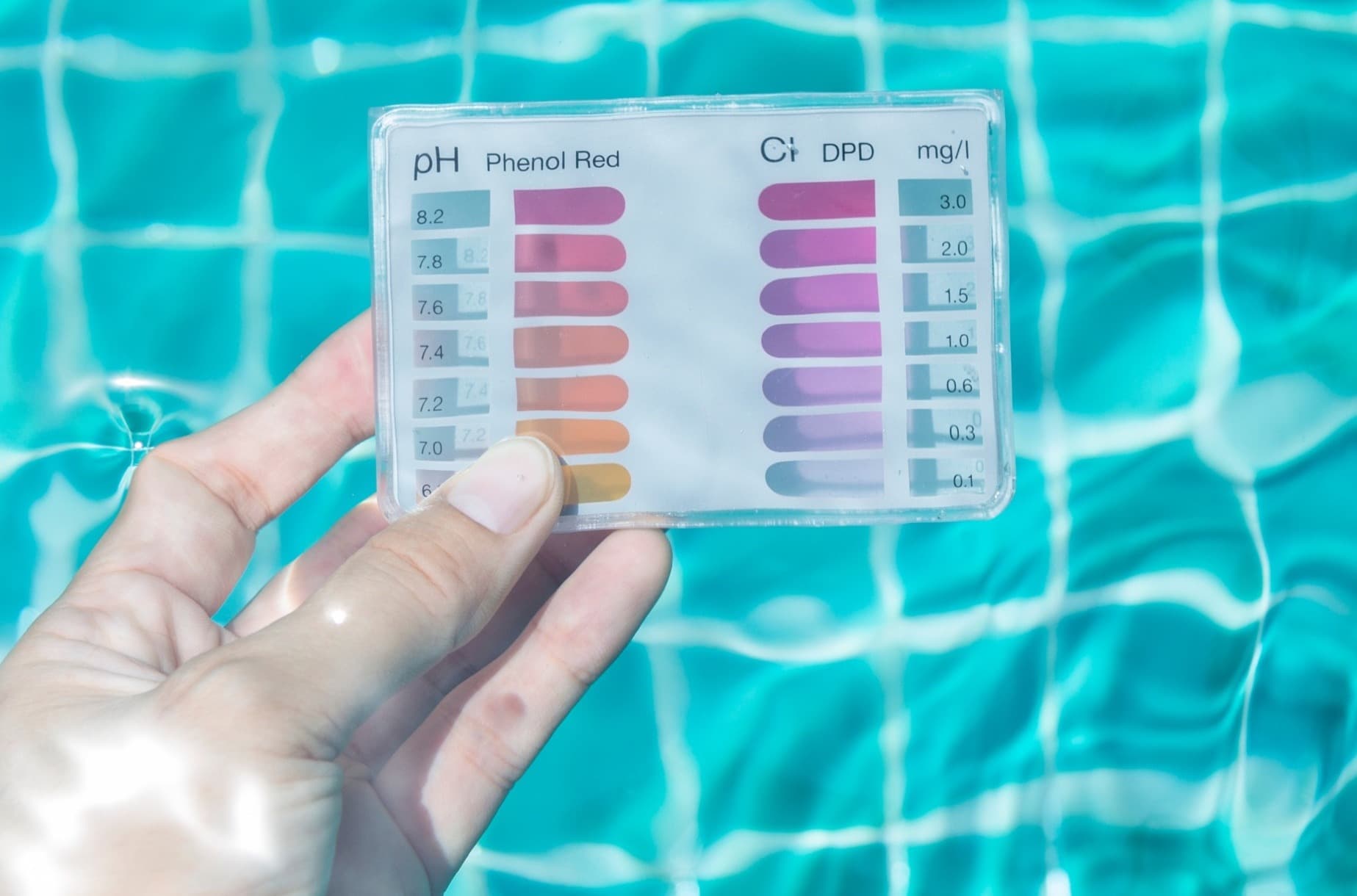
It is not. There are really only five numbers you need to pay attention to, and once you understand what they mean, keeping your pool clear is straightforward.
Free Chlorine: 1-3 ppm.
This is what kills bacteria and algae. Too low and your pool turns green. Too high and it irritates your skin and eyes. For most residential pools, keeping it between 1 and 3 parts per million is the sweet spot.
pH: 7.2-7.6.
This measures how acidic or basic your water is. When pH drifts too high, chlorine stops working well. When it drops too low, the water gets corrosive and eats at your equipment. Test this weekly.
Total Alkalinity: 80-120 ppm.
Think of this as a buffer for your pH. When alkalinity is in range, your pH stays stable. When it is low, your pH bounces all over the place and you end up chasing it constantly.
Calcium Hardness: 200-400 ppm.
Too little calcium and the water pulls it from your plaster, which causes surface damage. Too much and you get scale buildup on your tile and equipment. This one does not change as fast as the others, so testing once a month is usually enough.
Cyanuric Acid (CYA): 30-50 ppm.
This protects your chlorine from getting burned off by the sun. Without it, you are basically throwing chlorine away. But too much CYA actually blocks chlorine from working, so more is not better.
That is it. Five numbers. You can test all of them with a basic kit, or you can bring a water sample into our store and we will test it for free. We will tell you exactly what to add and how much. No guesswork.
Pool maintenance does not have to be complicated. It just takes the right information, and that is what we are here to give you.